


Pepi House: Happy Family
4.27.02K Reviews
App Specs
- Version
- 1.15.2
- Updated On
- License
- Free
- Downloads
- 50,000,000+
- Developer
- Pepi Play
- Categories
- Educational
- Platform
- Android, iOS
Screenshots
 Analysis by AppCompare
When I first open Pepi House: Happy Family, I find a bright digital home built for make-believe rather than a game with scores or a strict set of goals. Children can move through a family’s rooms, handle objects and turn ordinary moments into their own stories. That makes it an easy idea to understand for a first-time player: tap around, see what responds, and decide what the characters are doing today.
What to expect from this kind of play
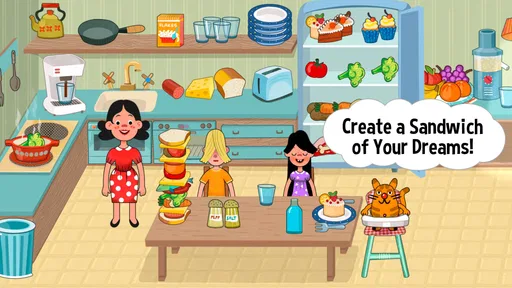
This is an educational pretend-play game from Pepi Play, and its appeal is closer to a dollhouse than to a puzzle app or a fast-moving adventure. The fun comes from choosing what happens next, not from completing levels. A child might decide that breakfast is being prepared, someone needs a bath, or the family is settling down in the living room. There is no single right story to follow, which is useful for children who prefer imaginative play over instructions.
The first few minutes are best treated as a little tour. I would let a child explore the home at their own pace, try tapping objects, and then drag a character toward something that catches their attention. That simple loop makes the first successful action easy to reach: get a character to interact with an object and watch the scene change. It is a small win, but it quickly shows how the game invites children to experiment.
Getting started without turning it into a lesson
After installing, I would begin together rather than hand over the device and expect a young child to work out every interaction alone. Show how to tap an item, how to move a character, and how to look for things that react. Then step back. A short demonstration is enough to get play moving without turning the game into a tutorial that interrupts the child’s ideas.
A practical first session could be as simple as asking, “What should this character do before dinner?” The child can test possibilities in the kitchen or another part of the home, and you can follow their lead instead of supplying a fixed answer. That gives the game a natural starting point while leaving room for independent discovery. If a child gets stuck, suggesting one object to try is usually more helpful than taking over the whole scene.
The app is free to download, with in-app purchases priced at $0.99 to $1.99 per item. I would keep that in mind if a child plays on a device where purchases are possible: check the device’s purchase settings and agree on a simple rule before handing it over. The game is rated Everyone, and it suits shared play as well as short stretches of independent exploration, though very young children may still benefit from an adult nearby.
Exploring the home and its small discoveries
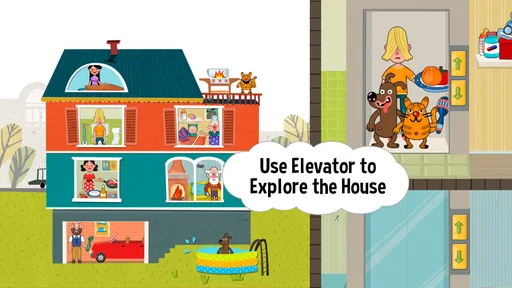
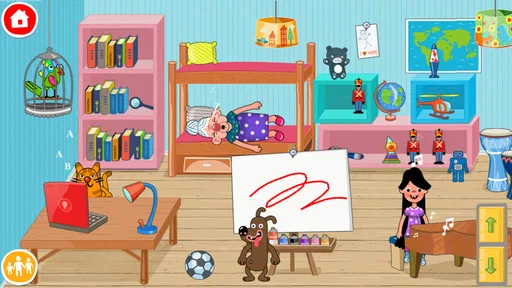
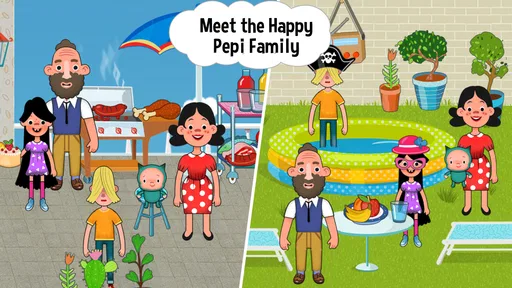
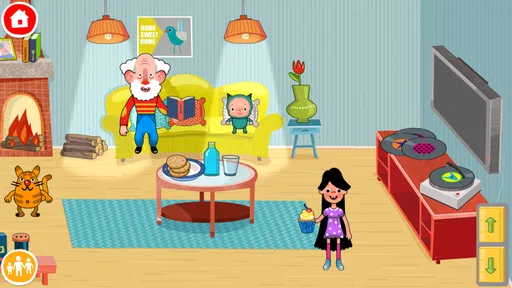
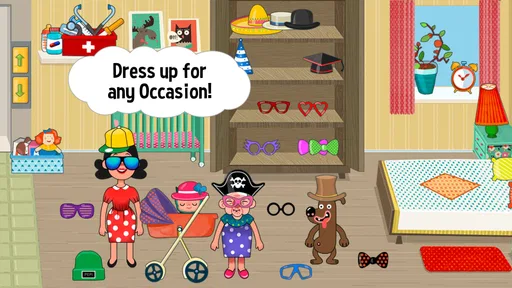
The first thing you'll notice about Pepi House: Happy Family is its colorful and inviting design. The app is essentially a virtual playhouse where children can explore and interact with a variety of rooms and characters. Think of it as a digital dollhouse where creativity knows no bounds. Each room is packed with interactive elements, from the kitchen to the living room, and even a bustling backyard.
Worth Reading Before You Choose

Flipboard Shows What News Apps Must Do Beyond the Feed

Switching to Android Auto Means Rethinking Your Driving Routine

Google Calendar Makes a Crowded Week Easier to Manage

Ludo King Makes the Most of the Minutes Between Plans

Baby Panda World Brings Quick Play to Modern Phones, but Its Game Library Feels Busy

ESPN’s Live Game View Makes Following Close Games Easier
What’s super cool is that you can move around objects, play with different characters, and even create your own little stories. The app encourages creativity, which is fantastic for developing young minds. Whether your child wants to pretend to cook in the kitchen or take care of a pet, the possibilities are endless.
Interactive features and a useful way to explore
The app is designed to be intuitive, so even the youngest users can navigate it with ease. The interactions are simple: tap, drag, and drop. But don’t let the simplicity fool you; the app is chock-full of little surprises. Every item has a reaction, and discovering these is part of the fun. For example, tapping on a TV might switch channels, and dragging a character to the bathroom gets them ready for a bubble bath.
Each character in Pepi House has their own personality. From the quirky grandpa to the playful kids, every character interacts differently with the objects around them. This makes the gameplay feel fresh and engaging every time. It’s like diving into a new adventure with every session.
One way to make the room-by-room discovery less overwhelming is to focus on a single small task rather than trying every object at once. A child can choose one character, decide what they need, and search for a fitting object. Later, they can swap roles and make a different character take the lead. This gentle change of perspective gives the same familiar rooms a new purpose without requiring the child to learn a separate game mode.
For a realistic everyday use, I can imagine opening it while waiting for food at a restaurant or during a quiet stretch at home. Instead of asking a child to sit through a long activity, offer a small prompt—“Who is getting ready for bed?”—and let them make a scene. The game works particularly well in these short, open-ended moments because a story can begin quickly and does not depend on reaching a particular ending.
What children can take from the play
Beyond entertainment, Pepi House: Happy Family is educational. It subtly teaches kids about daily routines, family roles, and even basic problem-solving skills. By mimicking real-life activities, children learn about responsibility in a fun, stress-free environment. And, honestly, who wouldn't want to learn how to fold laundry while having a blast?
The learning here is informal. I would not treat it as a substitute for lessons or expect it to teach a child a defined curriculum. Its stronger value is giving children a place to rehearse familiar routines, name what they are doing, and invent their own variations. A parent can make that richer by asking the child to explain the story or predict what might happen next, without correcting every detail of their pretend world.
Compared with educational games built around quizzes, matching tasks, or clear right and wrong answers, this one gives more control to the child and less structure. That is a real advantage for imaginative players, but a trade-off for families looking for measurable practice in letters, numbers, or a specific school skill. If a child enjoys following a challenge with a definite goal, a more structured learning game may be a better fit; if they like role-play, the home setting is the stronger draw.
Common points of confusion for a first-time player
Because the play is open-ended, a child may initially wonder what they are supposed to do. I would reassure them that there is no required mission and that exploring is part of the activity. If tapping does not produce the expected result, try moving a character closer to an object or testing a different item. The point is not to solve the house like a puzzle but to notice how its pieces can be used in a story.
Another possible confusion is expecting every session to feel like a new level. The same rooms and characters are the materials for play, so variety depends largely on the child’s ideas. That freedom can lead to inventive stories, but it also means a player who wants constant new content or frequent rewards may lose interest sooner. I see this as the main audience distinction: children who enjoy repeating and changing pretend scenarios are more likely to stay engaged than those who need a steady stream of goals.
Parents will appreciate the app’s focus on safety. It’s ad-free and doesn’t require an internet connection for play. This means your kids can enjoy it anytime, anywhere without you worrying about them stumbling upon inappropriate content or racking up bills with in-app purchases.
For a calmer handoff, I would open the game first, make sure the child understands the basic tap-and-drag actions, and set the purchase expectation before independent play. The in-app purchase range makes that last step sensible even when the game itself is free. The experience is best used as a contained play activity, not as a promise that every child will stay occupied for a fixed length of time.
Where it may feel limited
While Pepi House is a delightful experience, there are always areas for improvement. One thing that stood out is the limited number of rooms and characters. While this might not be a deal-breaker for younger players, older kids might find themselves wishing for more variety after extended play.
Additionally, expanding the range of interactions and adding more mini-games could enhance the app’s replayability. Although the app encourages creativity, having more structured activities might keep older kids engaged for longer periods.
That limitation matters most when a child has already explored the familiar interactions and is looking for a fresh challenge. Rather than pushing them to keep playing, I would treat the game as one option in a broader mix: a good choice for a brief imaginative break, but not necessarily the only activity to rely on for a long stretch. A physical dollhouse or pretend kitchen may suit children who want hands-on objects, while a puzzle-based educational game may suit those who prefer clear tasks and progress.
The game has a 4.2 average from around 256,000 ratings, and it has been installed over 50 million times. Those figures suggest it has reached a large audience, but they cannot tell a parent whether its unstructured style matches one particular child. I would use the child’s response to the first few explorations as the better guide: do they start inventing scenes, or do they keep asking what to do next?
Who I would recommend it to
I would recommend this to families with younger children who enjoy pretend play, familiar household routines, and making up stories with characters. It can also work well for a parent and child to play together, with the adult offering a prompt and the child deciding how the scene unfolds. The current version is 1.15.2, and the game supports Android 6.0 and later, so it is worth checking that an older device meets that requirement before trying to install it.
I would be less likely to choose it for an older child who wants competitive play, a substantial sequence of levels, or tightly guided educational exercises. It is also not the strongest fit for a child who becomes frustrated when a game does not tell them what to do. In those cases, a structured activity or a physical toy with more room for tactile play may be a better match than an open digital house.
Final thoughts on making it part of playtime
All in all, Pepi House: Happy Family is a fantastic app for young children. Its vibrant graphics and interactive gameplay make it a joy to explore. The educational aspect is a significant plus, ensuring that kids learn while they play. It's a safe, fun, and engaging app that brings the magic of playtime to your fingertips.
If you're looking to download an app that's both entertaining and educational for your little ones, Pepi House is definitely worth checking out. It’s a delightful little world that kids will love to dive into again and again.
Pros
- Engaging and colorful graphics.
- Intuitive gameplay for all ages.
- Promotes creativity and exploration.
- No in-app purchases required.
- Diverse characters and interactions.
Cons
- Limited replay value after completion.
- Some animations can be repetitive.
- Requires device storage space.
- Occasional minor bugs in gameplay.
- No multiplayer or online features.
FAQs for Pepi House: Happy Family
What is Pepi House: Happy Family about?
Pepi House: Happy Family is an interactive app designed for children, offering a virtual dollhouse experience. Players can explore various rooms, interact with family members, and engage in daily activities. The app aims to enhance creativity and imagination, providing a safe and educational environment for young users.
Is Pepi House: Happy Family safe for children?
Yes, Pepi House: Happy Family is designed with child safety in mind. It contains no third-party ads or in-app purchases, ensuring that children can play without distractions. The content is age-appropriate, promoting learning through play and offering a secure platform for young minds to explore.
What are the main features of Pepi House: Happy Family?
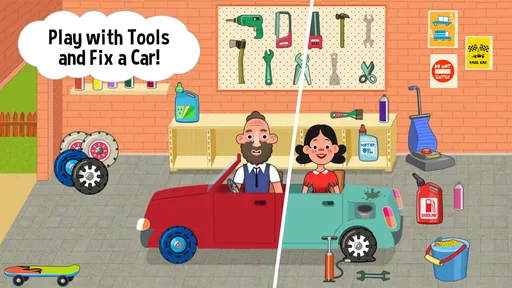
The app features a fully interactive dollhouse with multiple rooms to explore. Children can engage with different family members, pets, and objects, each with unique interactions. The app supports creativity and role-playing, allowing kids to create their own stories and scenarios within the virtual home environment.
Can Pepi House: Happy Family be played offline?
Yes, Pepi House: Happy Family can be played offline, making it an excellent option for travel or situations where internet access is limited. Once downloaded, all features and content are accessible without needing an active internet connection, providing uninterrupted playtime for children.
Is Pepi House: Happy Family available on both Android and iOS?
Pepi House: Happy Family is available for both Android and iOS devices. Users can download it from the Google Play Store for Android devices or the Apple App Store for iOS devices. Ensure your device meets the necessary specifications for optimal performance and user experience.


